
01
General industrial use
For processes whose moisture requirement can be reliably met with refrigeration drying.
Refrigerated dryers are a robust drying stage for many industrial air systems. MX Solutions checks whether achievable pressure dew point, ambient conditions and process requirements fit the application.
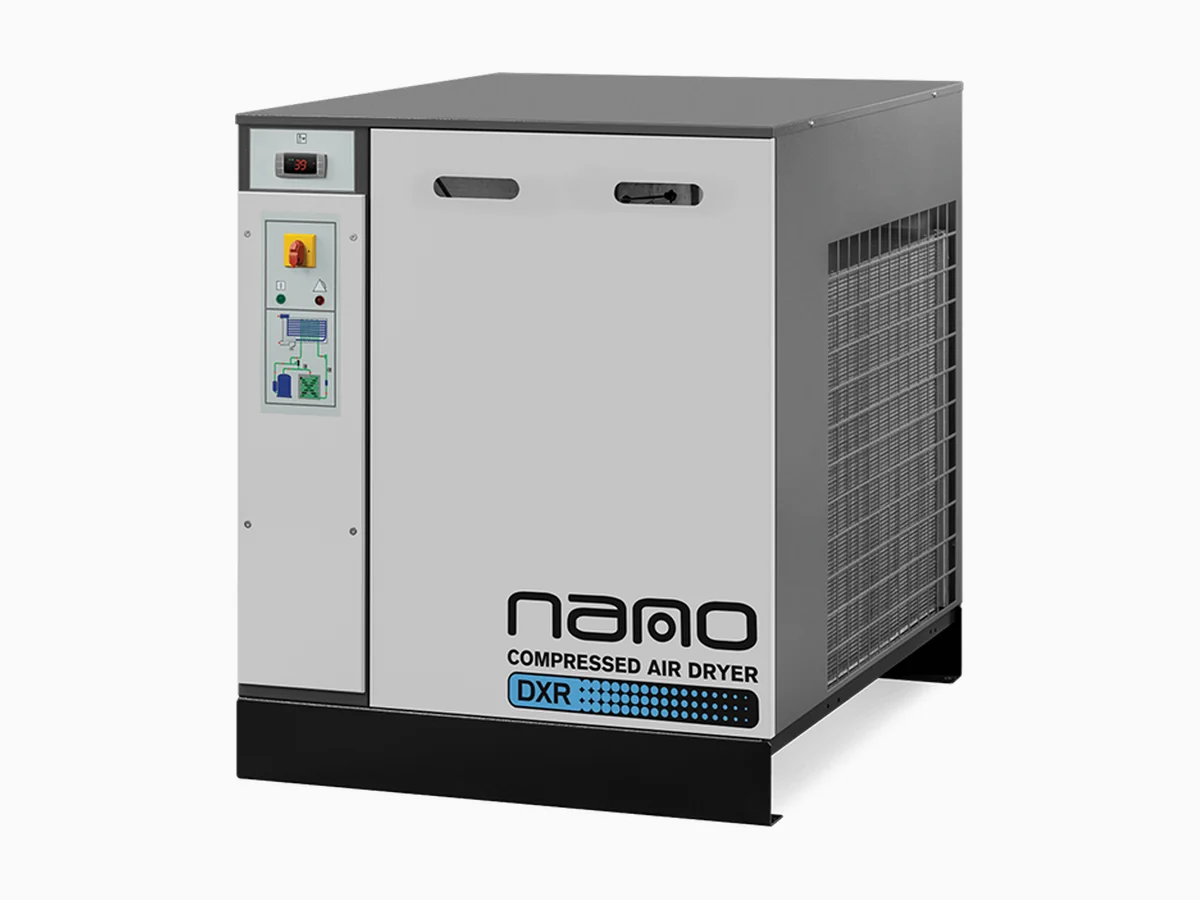
Refrigeration drying is not sufficient for every process. Required pressure dew point, lowest ambient temperature, load variation and downstream use determine suitability.
Final selection follows a review of the process data.Whether this product family fits your project depends on its match with the duty profile. Key inputs are: pressure dew point, inlet temperature, flow, environment and load.
For processes whose moisture requirement can be reliably met with refrigeration drying.
Selection accounts for actual flow, inlet conditions and operating hours.
Depending on the requirement, refrigeration drying can form part of a multi-stage treatment train.
For reliable integration into the intended process, inlet conditions, peripherals, handover point and service access are assessed together with the equipment.
The required condition at the user determines the drying principle.
Inlet temperature, ambient, pressure and load profile influence selection.
Drainage and treatment of generated condensate are planned with the dryer.
The values already available are enough for an initial technical review. Any open points can then be clarified with you.
The product family defines a technical framework. The suitable configuration and scope are determined from your confirmed project data and the manufacturer documents valid at the time of enquiry.
Selection principle: refrigeration is suitable for many industrial networks when the process does not require a very low pressure dew point and downstream pipework stays above the resulting moisture limit.
Design inputs: flow, pressure, inlet and ambient temperature, load variation and the coldest point in the network are relevant.
Send the known operating data. MX Solutions will check whether the product family fits and identify the supporting components required.